


The inaugural Fiber+Fabric Craft Festival featured more than 200 classes covering the rich gamut of the crafting industry. Crafters learned from leading educators in quilting, sewing, crochet, knitting, paper arts, cosplay, beading, embroidery, and beyond.
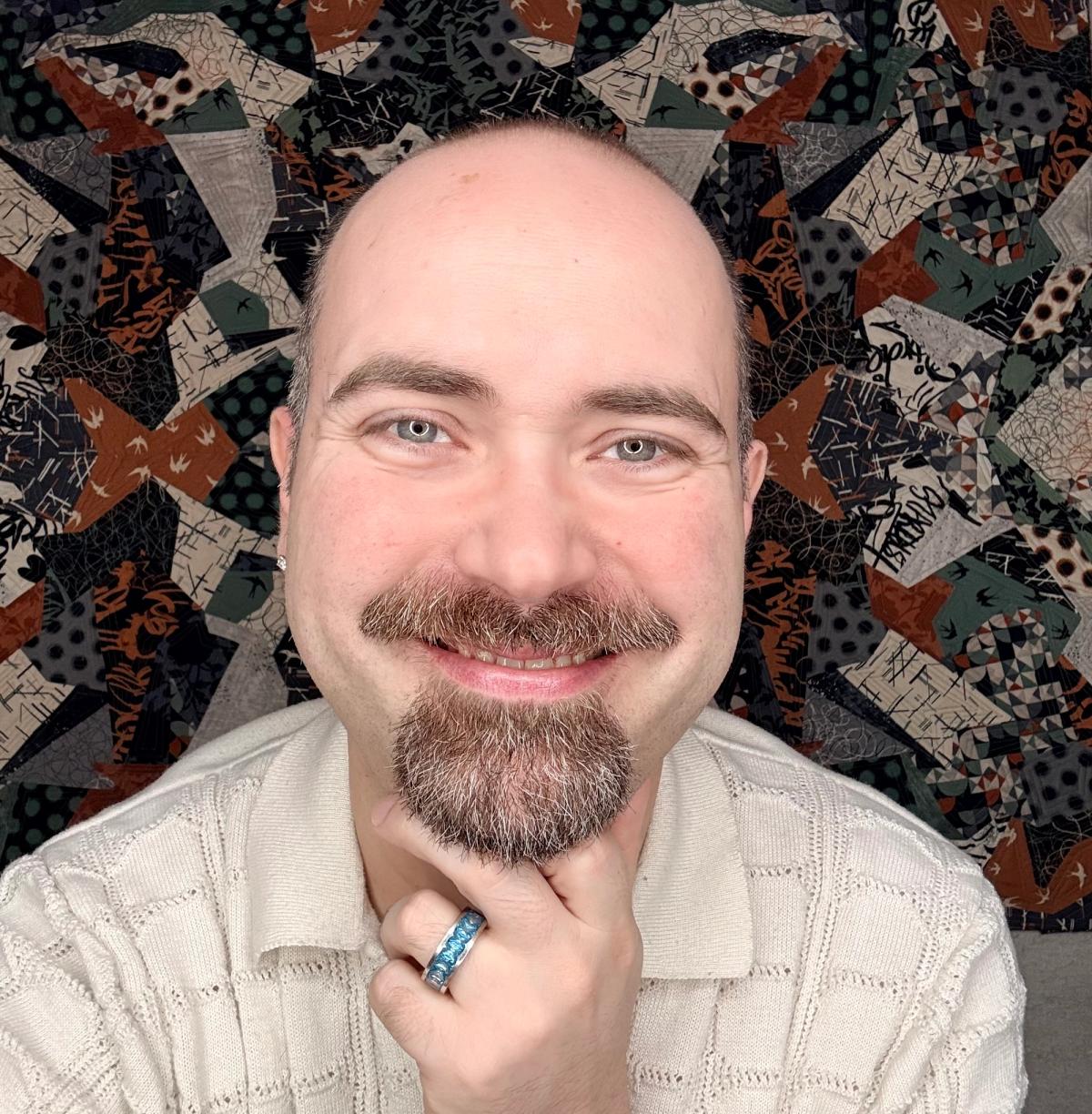
Michael Eason from Quilchemy taught several English Paper Piecing classes at Fiber+Fabric Craft Festival to introduce quilters and sewists to the technique and expand their understanding of its possibilities. We talked with Michael about his experiences with EPP and Improv EPP, what he learned from teaching at Festival, and what he hopes to see at the show in the years to come!
When did you start quilting?
I think it was somewhere in 2002 or 2003 when I began quilting.
What were your first experiences with quilting?
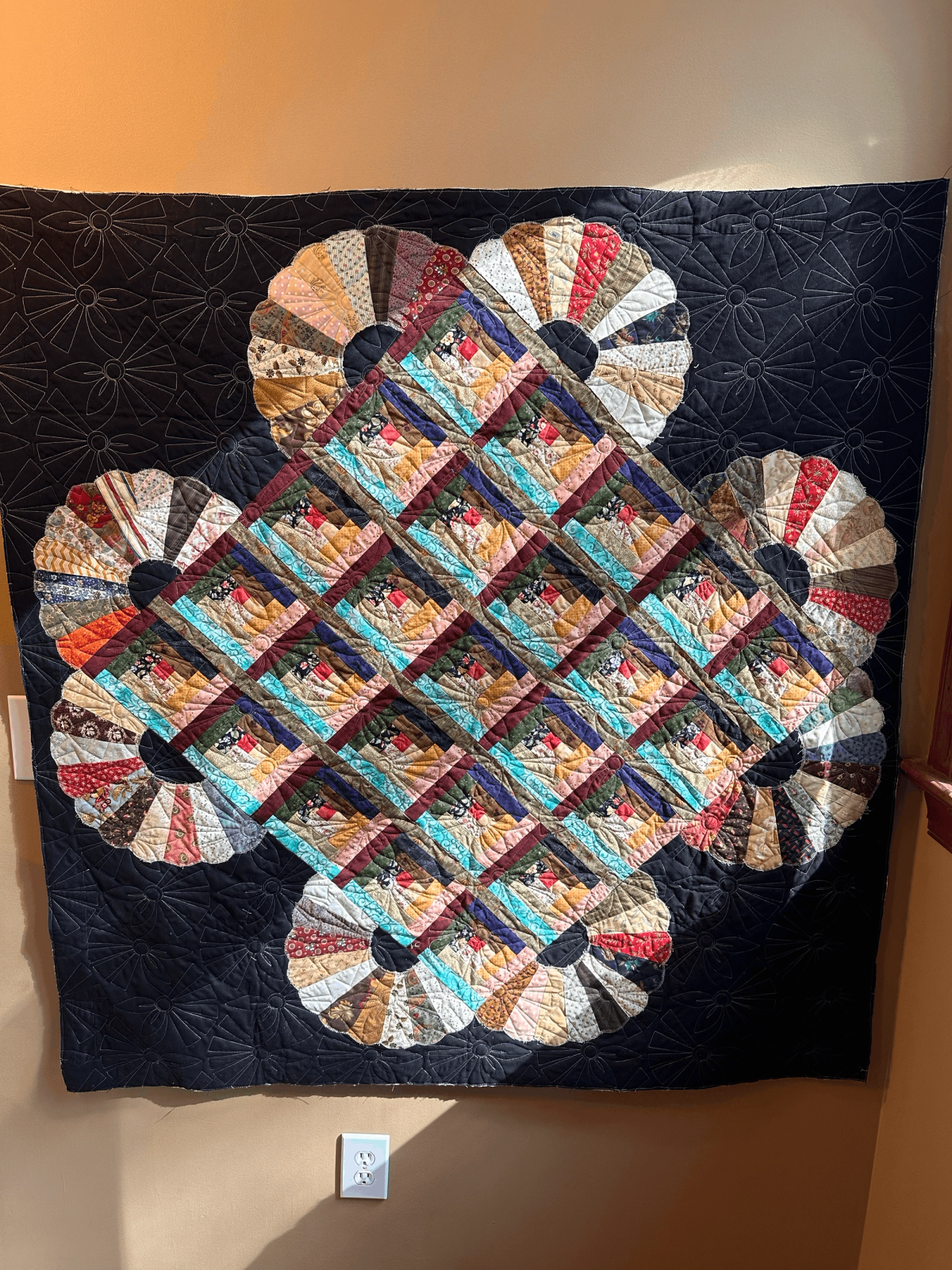
When I was a teenager, my dad’s sister gave me a bag of wool squares. At that time I didn’t really have any interest. Fast forward and I was visiting my parents and happened upon the bag of squares. My mother had an older Singer sewing machine, so I borrowed it and got everything home and made my first attempt at a quilt. It was the ugliest quilt, but I was hooked. I began combing through the books at the library, YouTube videos, etc. to try and learn all I could about the process. I was very much drawn to traditional quilt patterns and fabrics at the time. With each quilt I made I gained more skills, and continued to challenge myself when making quilts.
You especially love English Paper Piecing—what draws you to EPP as a quilting technique?
For me, EPP is about slowing down. It’s not about racing to finish a project. It’s realizing I am in control of every stitch, every fabric placement. The shapes I use. I will quote Kate Jackson from the Last Homely House on YouTube. She says EPP allows you to get out of your head, and into your hands. There is something so comforting about being tactile. It increases my awareness of my body. How I hold myself, how I move my hands and fingers to manipulate the needle and thread.
Beyond that, it has so many fantastic applications. You can use so many different geometric shapes. You can play with your fabric selections and placement to create so many secondary designs. I feel like the possibilities are endless. I never feel bored with it.
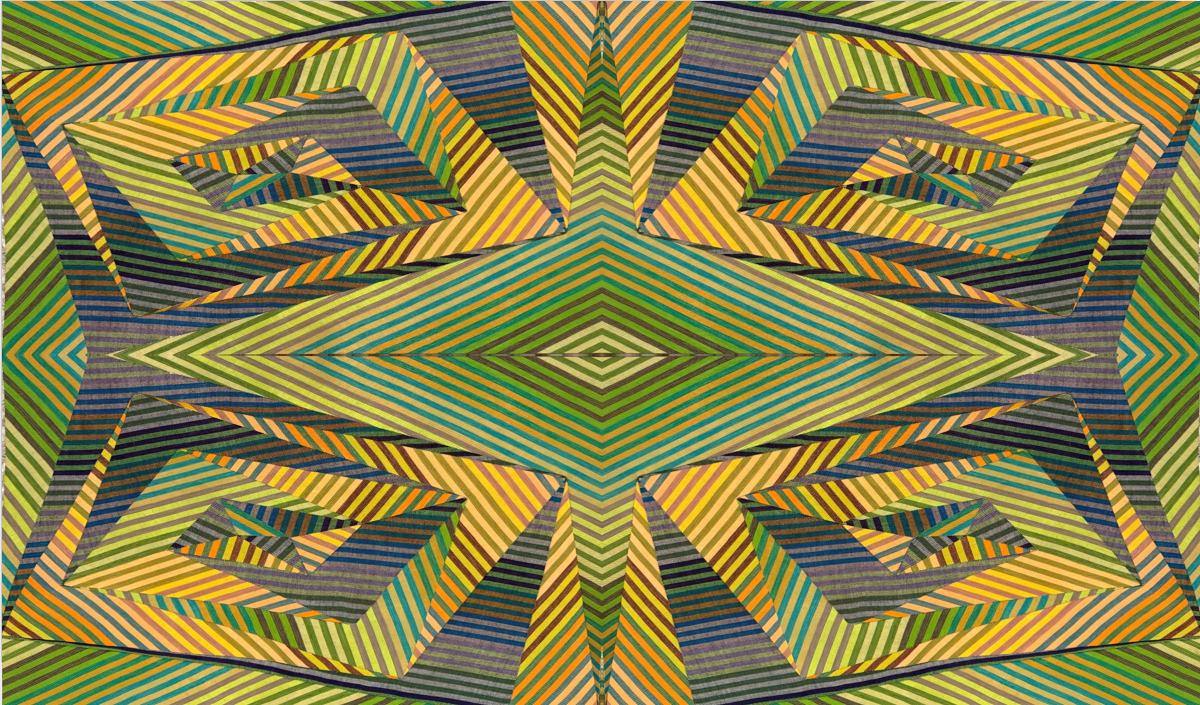
You focus on “Improv EPP.” Can you talk about how this differs from regular EPP, and why you prefer it?
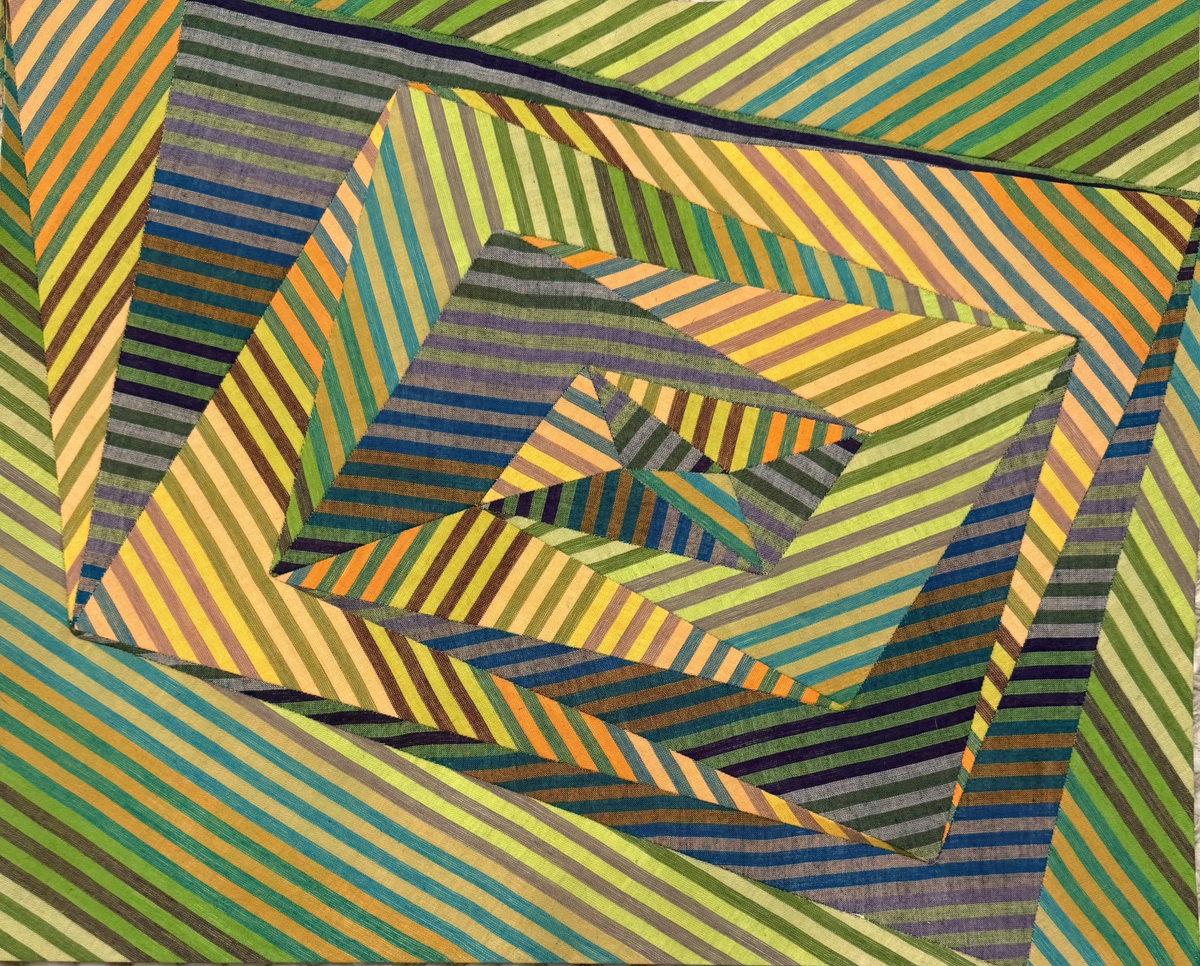
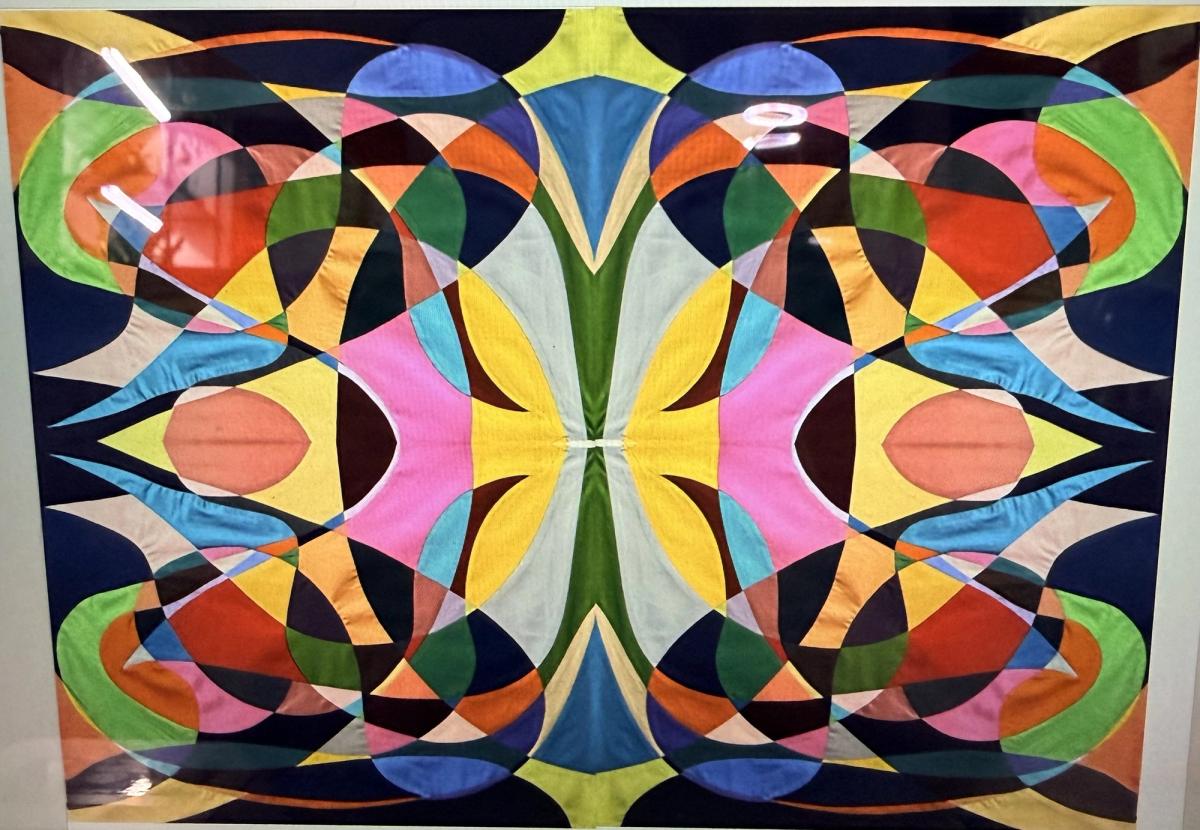
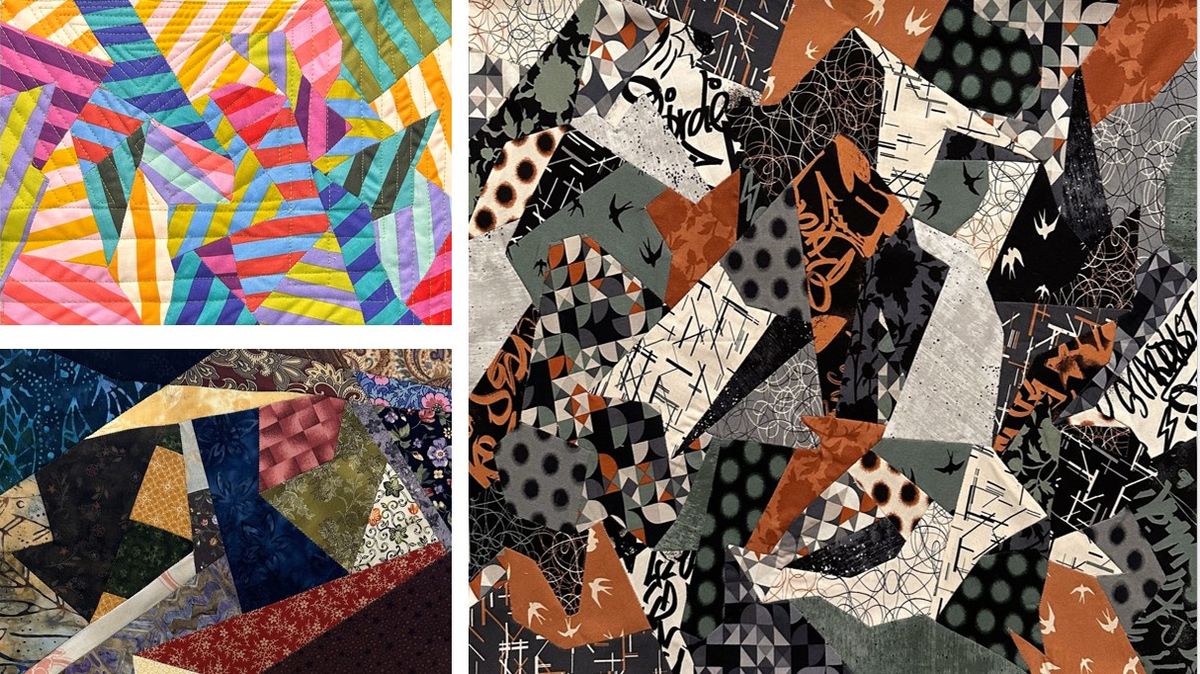
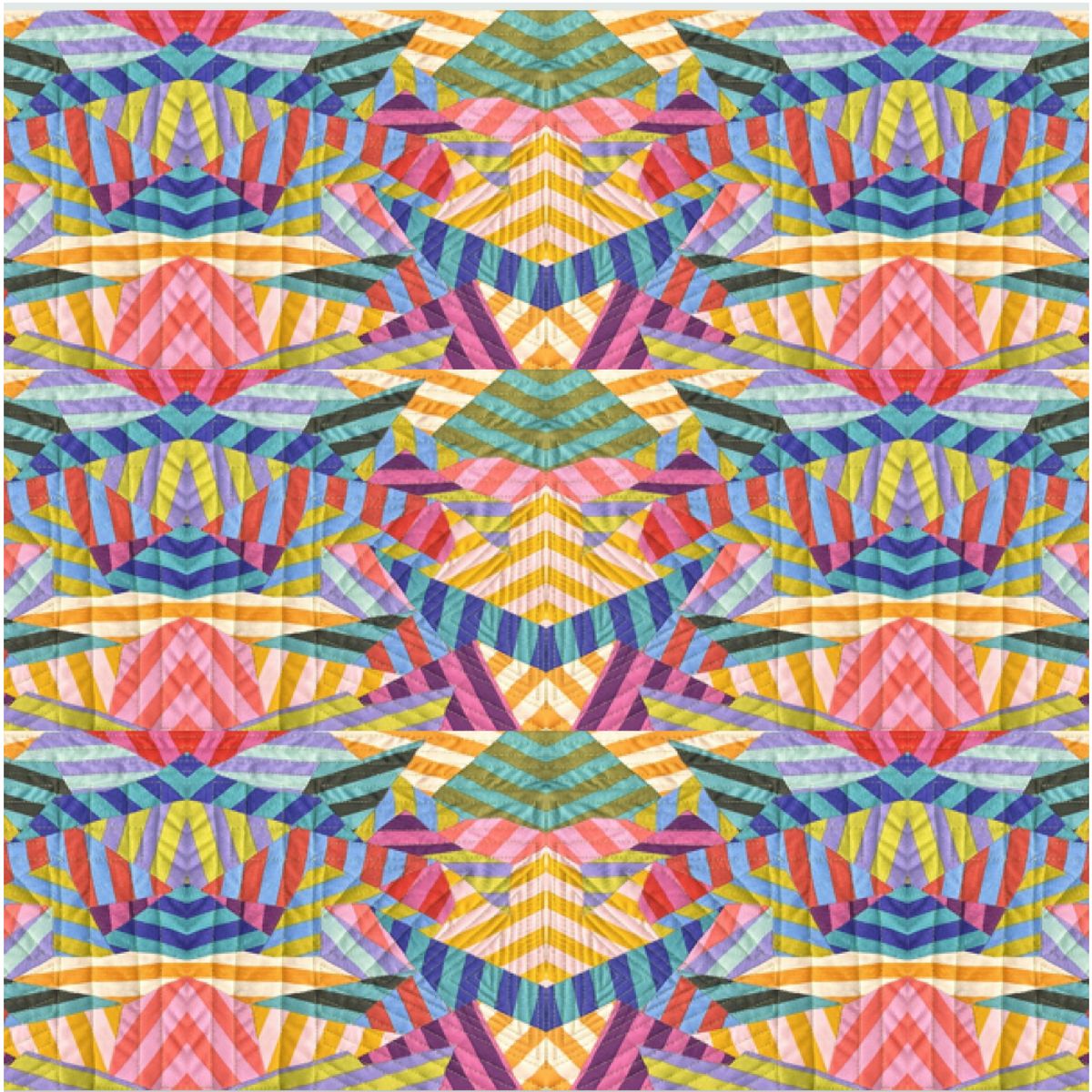
I love Improv EPP. To me it opens up the world of possibilities. I am the one in charge of the shapes I draw. I approach each design without fear. I don’t design thinking how the final piece will look, or how the pieces will go back together. I try to be as freeflowing with it as I can be. I can use curves of any sort. I can do anything really. Beyond that, when I finish a piece I love to play with mirror images to see what happens if I were to make a piece multiple times and put them together, or use a different color way of fabric.
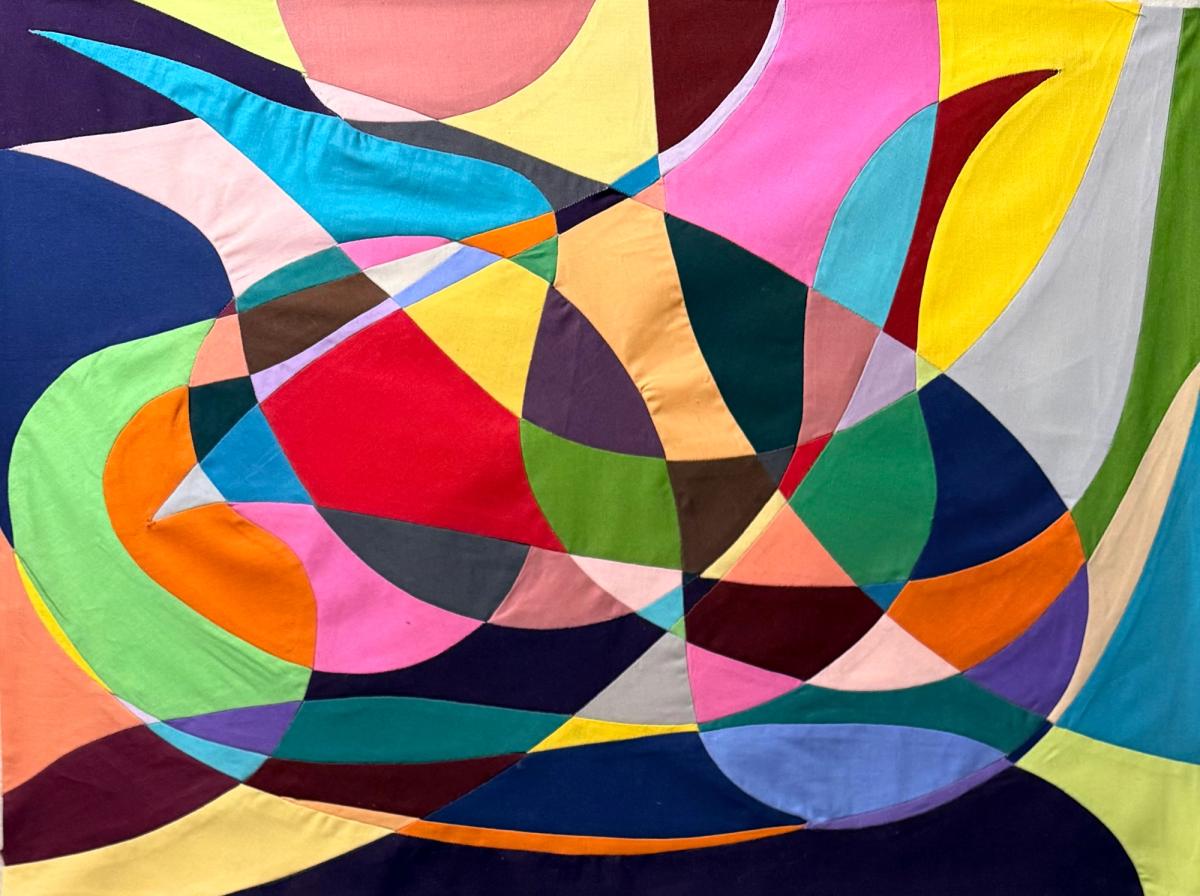
How do you approach a new design? Where do you find inspiration, and how do you translate that into a design?
This is an interesting question to me. For me, my designs can come from something I have seen that has inspired me. A shape or movement of trees, perhaps. A piece of artwork. My camera roll on my phone is a treasure trove! Sometimes how I am feeling comes into play. I use the design as an outlet. To allow me to connect to my feelings in a healthy way and be able to create something beautiful from them. Almost bringing my feelings to life.
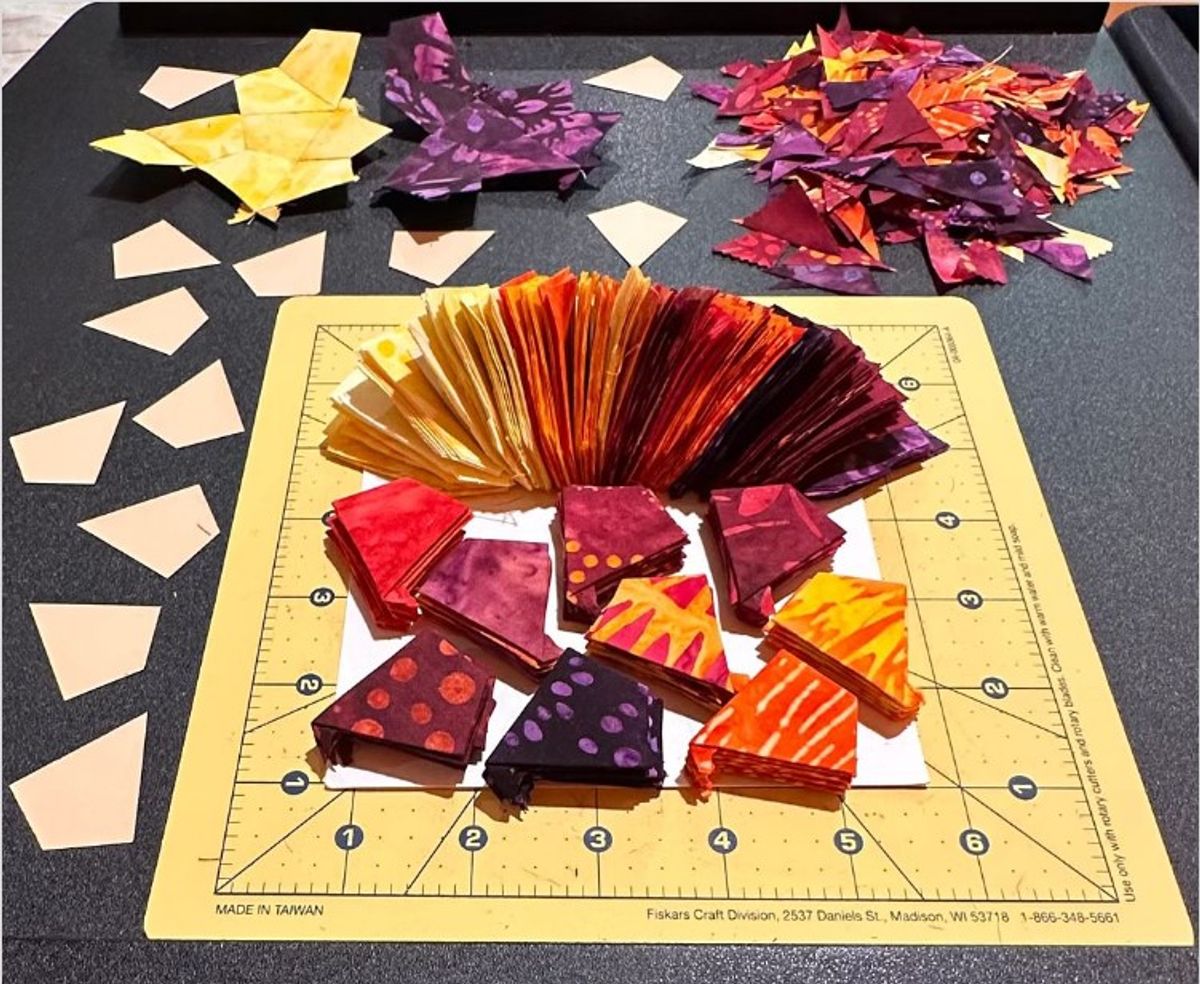
You taught Improv English Paper Piecing & Design and Einstein Tiles and English Paper Piecing at Fiber+Fabric Craft Festival. What was that experience like?
It was an incredible experience! This was my first time teaching at an event like this, so I didn’t really know what to expect. How many students would I have? Would I be prepared enough? But as I look back, my main objective was to try and connect with the students. I like to think that I did that, and that I introduced them to new ideas and concepts related to EPP.
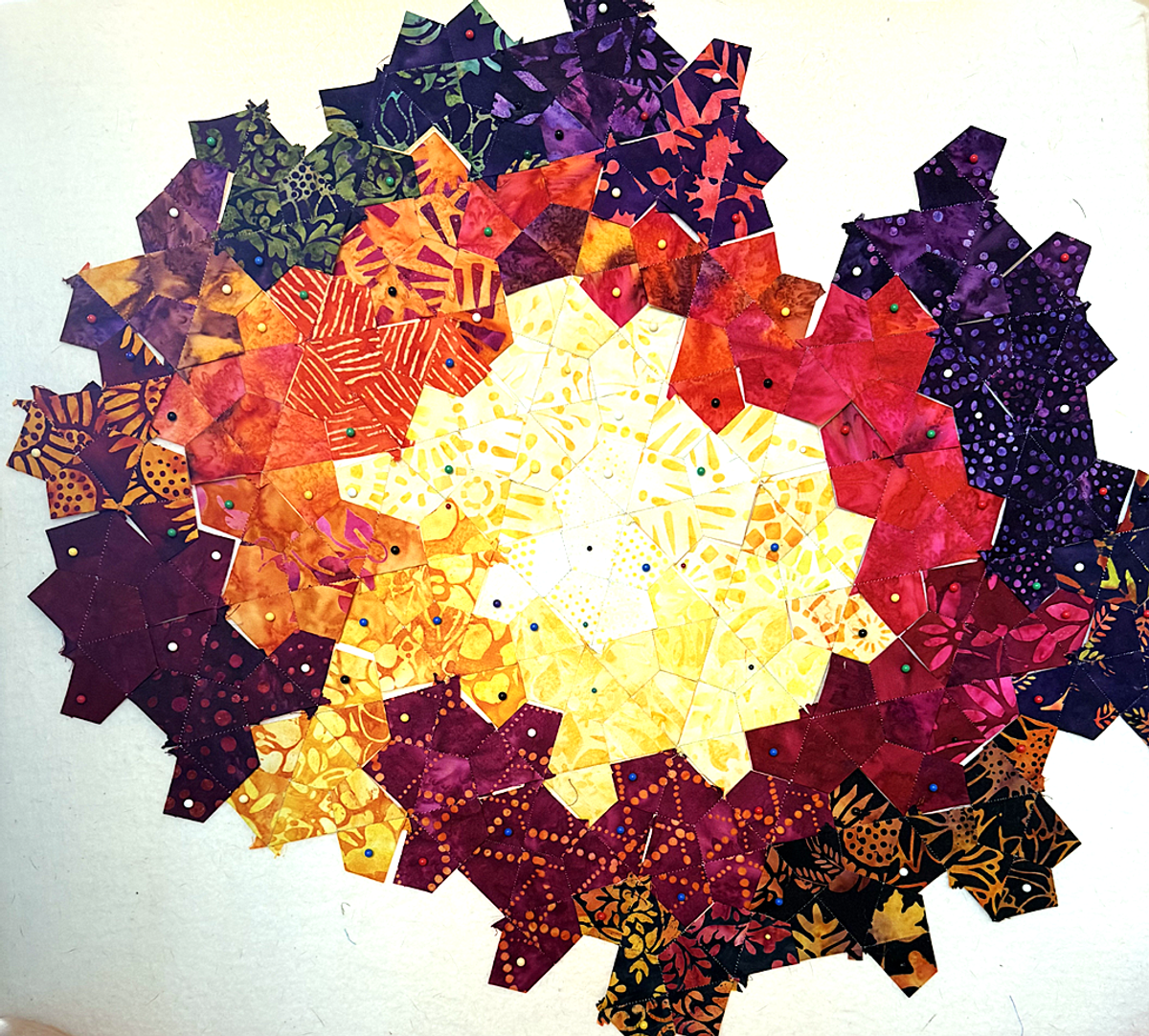
What did you want quilters to take from those classes?
I hear a lot that people think they can’t do EPP. I disagree. I have often found that the students who have never done EPP are able to come in without any preconceived ideas about the process, which allows them to listen to the content, and then proceed with their own ideas of how to execute a piece. This is always what I want for students: for them to learn a new concept that they then get to interpret through the lens of their own creativity.
Did you learn anything new from the experience?
Yes! First, you never know who will be in your classes, and where that can lead. All of my students are wonderful, and also sometimes I get surprised. I had a couple folks that I have connected with now that we have bonded, but also have some really awesome things in the works!
Second, form a relationship with the person you are communicating with on the show side. It goes a long way when you are able to communicate effectively on the needs for the class, any expectations from the show, etc.
Third, being myself in the teaching space is exactly what makes the classes special. I feel like I bring a different perspective on EPP. I encourage students to be aware of their body and share ways to make sure they take care of themselves. Bringing warmth and laughter into the class as well. I am not afraid to laugh at myself if I blunder, and I never think I am the smartest person in the room.
What would you tell quilting and sewing teachers interested in teaching at next year’s Fiber+Fabric Craft Festival?
Submit your ideas, do it scared. Life is short, and if we have something to share then we should. Quilting is an art form and we need to remember that. There is also such an incredible community of quilters waiting for you and the ideas you have to share. Honestly, I am hoping I get to come back!
What classes would you love to teach at next year’s Fiber+Fabric Craft Festival? What classes would you love to see offered next year?
I would love to teach my Improv EPP class again. One basic, and one where I introduce other materials outside of cotton, such as silk, satin, denim, and even multi layered fabric. But I need to get to work if I am going to do that! Gotta have samples!
Classes I would like to see offered… Honestly it’s simple, if it’s a new idea or a twist on something that has been around for a long time, I would like to see it. I know in a venue like the convention center it could be difficult to do, but fabric dying or block printing classes would be amazing!
What are you excited about right now in the world of quilting?
The things my friends are doing. So I talk about community and I have found mine. I have several very close friends who are doing some really incredible things. One is looking to open their own quilt shop right now. He also has launched his fabric line with Dear Stella. I have another friend who is putting out their first fabric line with QT Fabrics. Another friend is doing quilt cruises! Then another who is constantly putting out new patterns. I am honestly amazed at all of them. This really only scratches the surface of what they are doing, and this doesn’t touch the myriads of other friends I have that inspire me everyday!
What advice would you give to quilters interested to try—but nervous about— Improv EPP?
To me, nerves tell us that what we are doing is important. I would say it is only fabric, paper, and thread. There is no wrong or right way to do Improv EPP. That’s why it’s Improv. If a seam doesn’t line up, it becomes a design choice. If something looks wrong, you can always get out your trusty seam ripper and start again. Confidence only comes with practice. My experience has been that it doesn’t take long.
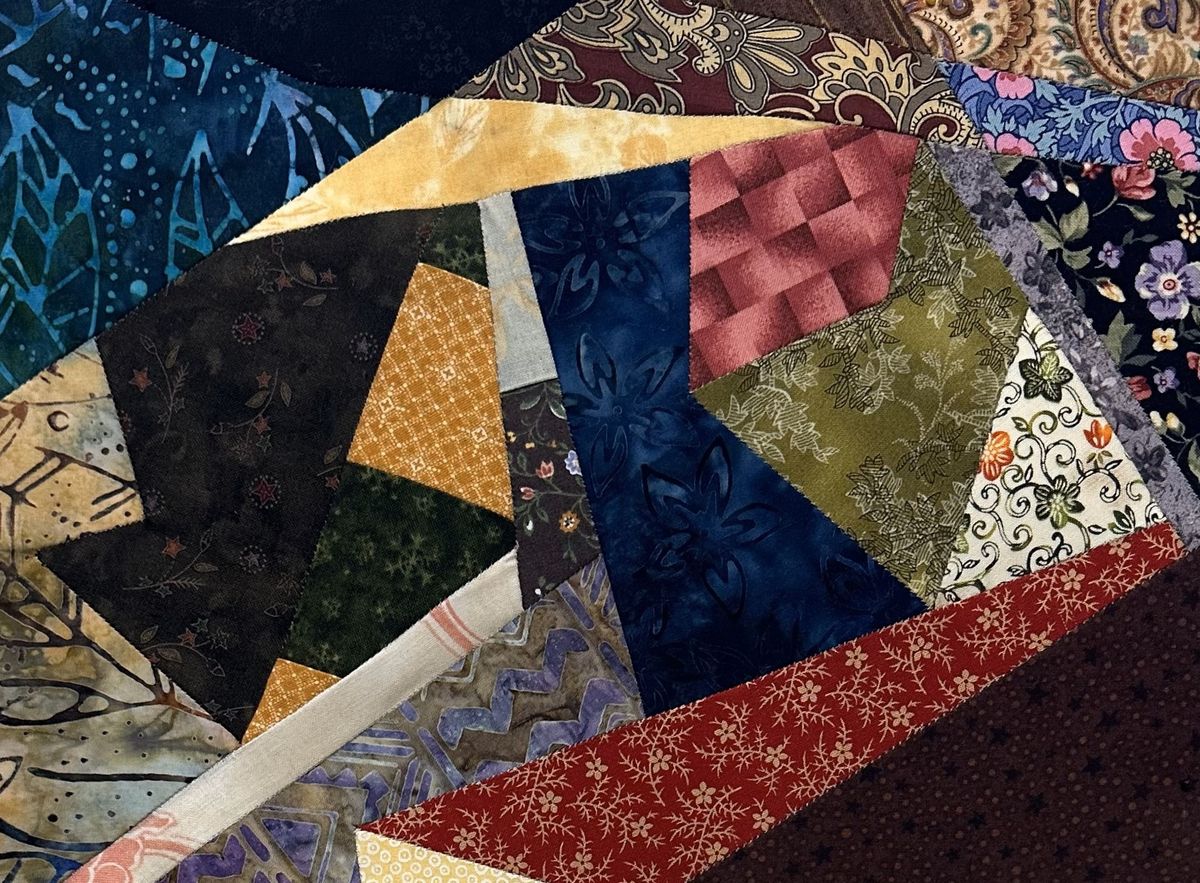
Do you have any classes or projects that would give them a good place to start?
I do have one pattern that is preprinted, so it removes the process of designing and maybe removes some of the pressure to have to do the design portion as well. As far as my classes, my main class for Improv EPP is a 3 to 4-hour class. I bring all skill levels along. I wander the classrooms frequently, and encourage questions, and I share the questions with the whole class because if one student has the question, it’s likely others do or will too. I approach the class without expectations for the students other than that I hope they take away some new skills that they are willing to try and that they continue to practice.
The Fiber+Fabric Craft Festival invites teachers, speakers and demonstrators to be part of the 2027 lineup. If you have expertise to share or a passion for teaching, we want to hear your idea. Click here to answer our call for speakers!